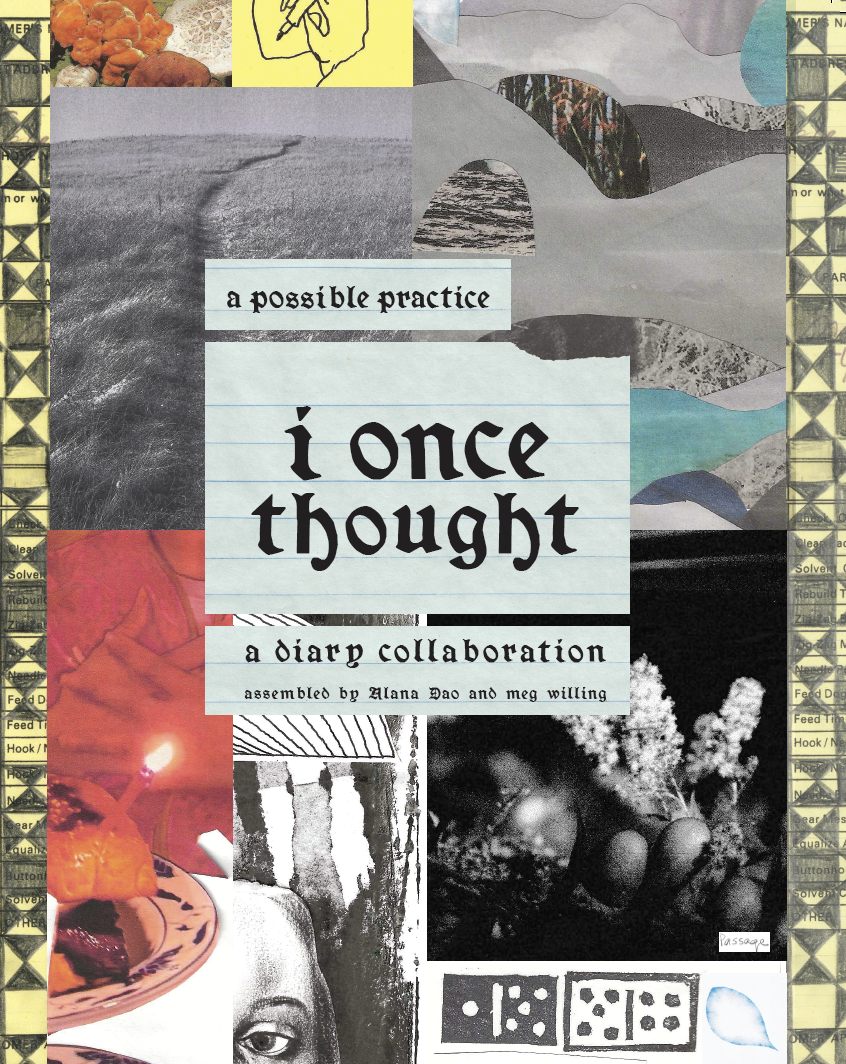
i once thought
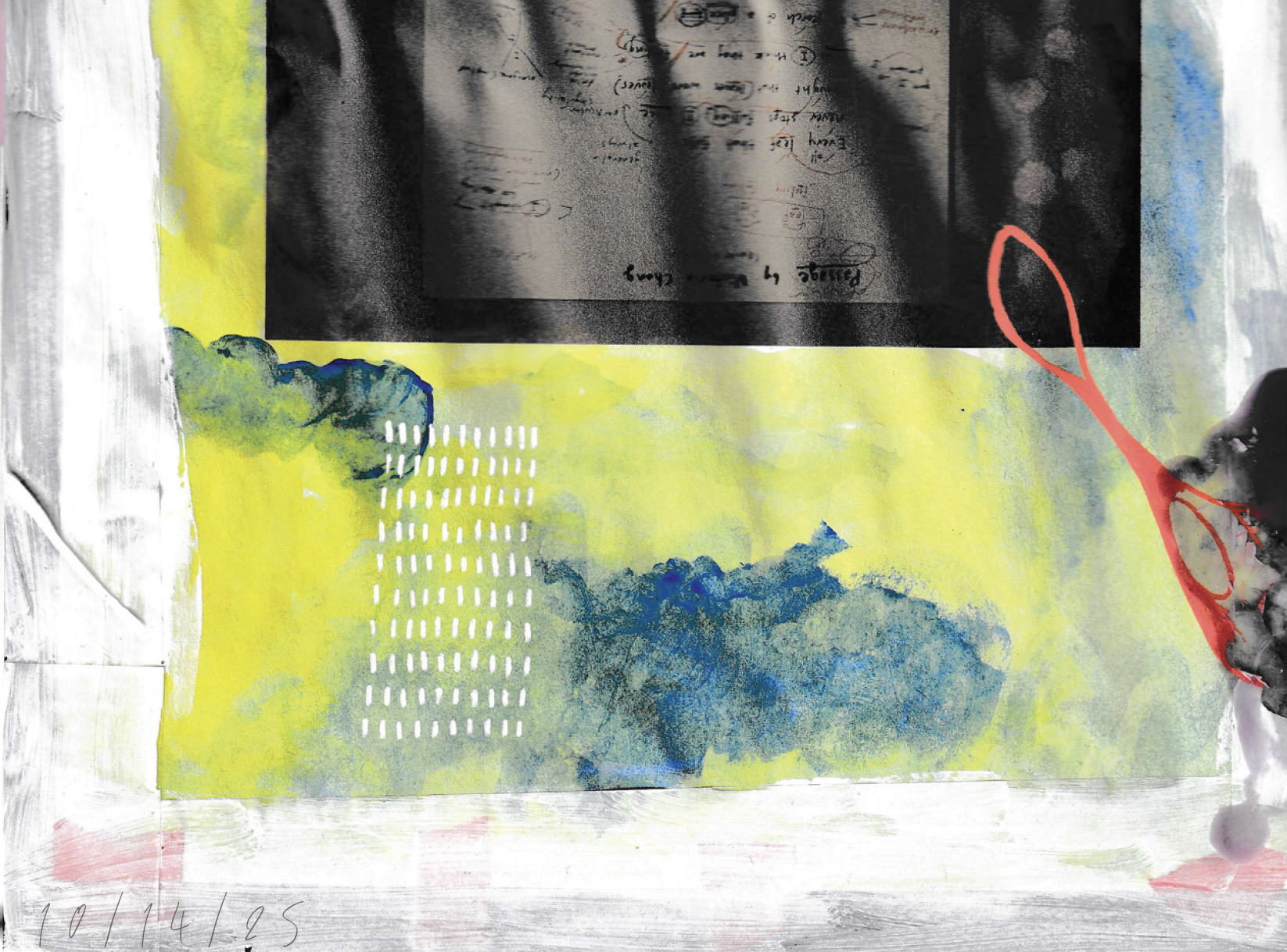
a diary collaboration in conversation with Victoria Chang’s poem “Passage”
Passage
Every leaf that falls
never stops falling. I once
thought that leaves were leaves.
Now I think they are feeling,
in search of a place—
someone's hair, a park bench, a
finger. Isn't that
like us, going from place to
place, looking to be alive?
Victoria Chang’s most recent book of poems is With My Back to the World, published in 2024 by Farrar, Straus & Giroux in the U.S. and Corsair/Little Brown in the U.K. It received the Forward Prize in Poetry for Best Collection. A few of her other books include The Trees Witness Everything, OBIT, and Dear Memory: Letters on Writing, Silence, and Grief. She has written several children’s books as well. She has received a Guggenheim Fellowship, the Chowdhury International Prize in Literature, and a National Endowment for the Arts Fellowship. She is the Bourne Chair in Poetry at Georgia Tech and Director of Poetry@Tech. Visit her website at victoriachangpoet.com.
Victoria Chang, “Passage” from The Trees Witness Everything. Copyright © 2022 by Victoria Chang. Used with the permission of The Permissions Company, LLC on behalf of Copper Canyon Press, coppercanyonpress.org.
poem
We arrived at our fifth cycle of A POSSIBLE PRACTICE in the autumn of 2025 with all of our usual methods. We unpacked our pockets of poems we’d held close, but deep down we felt lost, at a loss. The weight of larger questions loomed: How do we want our project to exist in the world? What is meaningful? What does it mean to make art in a time of genocide? During this rise of fascism?
Slow to move forward, we looked around us. We witnessed people documenting the circumstances of their lives. Writers and journalists, children and young people recorded their stories: kids with cats that provide comfort in Palestine, journalists remapping freed prisons in Syria, all emphasizing the power of creating and preserving the record.
We thought of all of the ways memory and experience can live on. We paused and remembered our diaries - sealed notebooks, embellished hardcover journals, thin-spined agendas with ribbons that marked seasons. A place where our interior lives could make their own homes. We considered the minutiae of our days, the rushing movement of time. We kept watch, attentive to what wanted to find us.
In November, meg listened to Kristen Case read from her book “Henry David Thoreau’s Kalendar: Charts and Observations of Natural Phenomena” under the high, tin ceilings of a local bookstore. In it, Case writes: “...even as Thoreau acknowledges that ‘we are conversant with only one point of contact at a time,’ he also gestures toward another truth about time — that ‘each annual phenomenon is a reminiscence & prompting,’ that our experiences of the world are connected, pointing backward toward past experiences and forward toward future ones.” “…a reminiscence & prompting,” we repeated. We remembered Timothy Snyder’s “On Tyranny”: “Fascists despised the small truths of daily existence.” What would it mean to document our small truths in this continuum?
Now committed to the medium of the diary, we had to find our poem. What could speak to both this form and our felt, amorphous questioning?
Over the course of three months, we narrowed our list of ten poems down to three, then to one, then back to three, four, five… In desperation, we reconsidered everything on the list again, debating for hours, annotating, returning days later without resolution. In the end, our theme poem was the first one we’d shared with each other: Victoria Chang’s “Passage”. A passage of a diary. A passage of time. A passage from one phase to the next, from one world into the next.
With this clarity, we asked:How can the diary be a radical space to share the experiences that shock us into being? Into belonging? How can the deliberate practice of recording our daily lives strengthen our resolve to stay engaged with the present moment, to not turn away? What awakens within us when we intentionally witness ourselves / witness others / allow others to witness us?
Thinking about: the power of slow practice, the power of observing; the ephemerality of life; the archive; the seasons; the magical and the mundane; (what to do with it all); falling vs feeling; this diary, this container for falling and feeling; simplicity and the simplicity of knowing; grief and the process of grief; (what to do with it all); epiphanies; revelations; simultaneity; our capacity to change; touch; searching; movement (a lesson, a learning); the leaves; seeing ourselves — all of ourselves — in the leaves
We asked nine artists we admire to join us in this exploration: janan alexandra, Julia Arredondo, Serena Himmelfarb, Tobey Katt, Sydney S. Kim, Addison Namnoum, Sarah Patterson, Maria Pinto, and Sarah Shaw. We stitched and mailed handsewn notebooks to each collaborator. These would be their diaries. We kept two for ourselves. We spent the late autumn days working separately, but in solidarity - this window of time illuminated by our collective intention.
The chaos of life was imposing, but we guarded ways to be together. Around Alana’s kitchen table, we pored over the completed diaries, tracing echoes of image, color, and feeling across their pages. We decided on an order. Decided (after much debate) on once again devising an index. As thematic key, but also as its own kind of poem. We dreamt into what this book would feel like to hold, touched magazine covers, named a texture we loved but couldn’t afford. Stucco. We cried over cruelties, terrible songs, cottages, engulfed in the moment.
How do we do this every single day? How do we keep going? We spiral. We return to familiar places with newfound perspective. “I once / thought that leaves were leaves. / Now I think they are feeling, / in search of a place— / someone’s hair, a park bench, a / finger. Isn’t that / like us, going from place to / place, looking to be alive?” writes Victoria Chang.
This is what it felt like to be alive during our fall together. This is what it feels like to be alive.
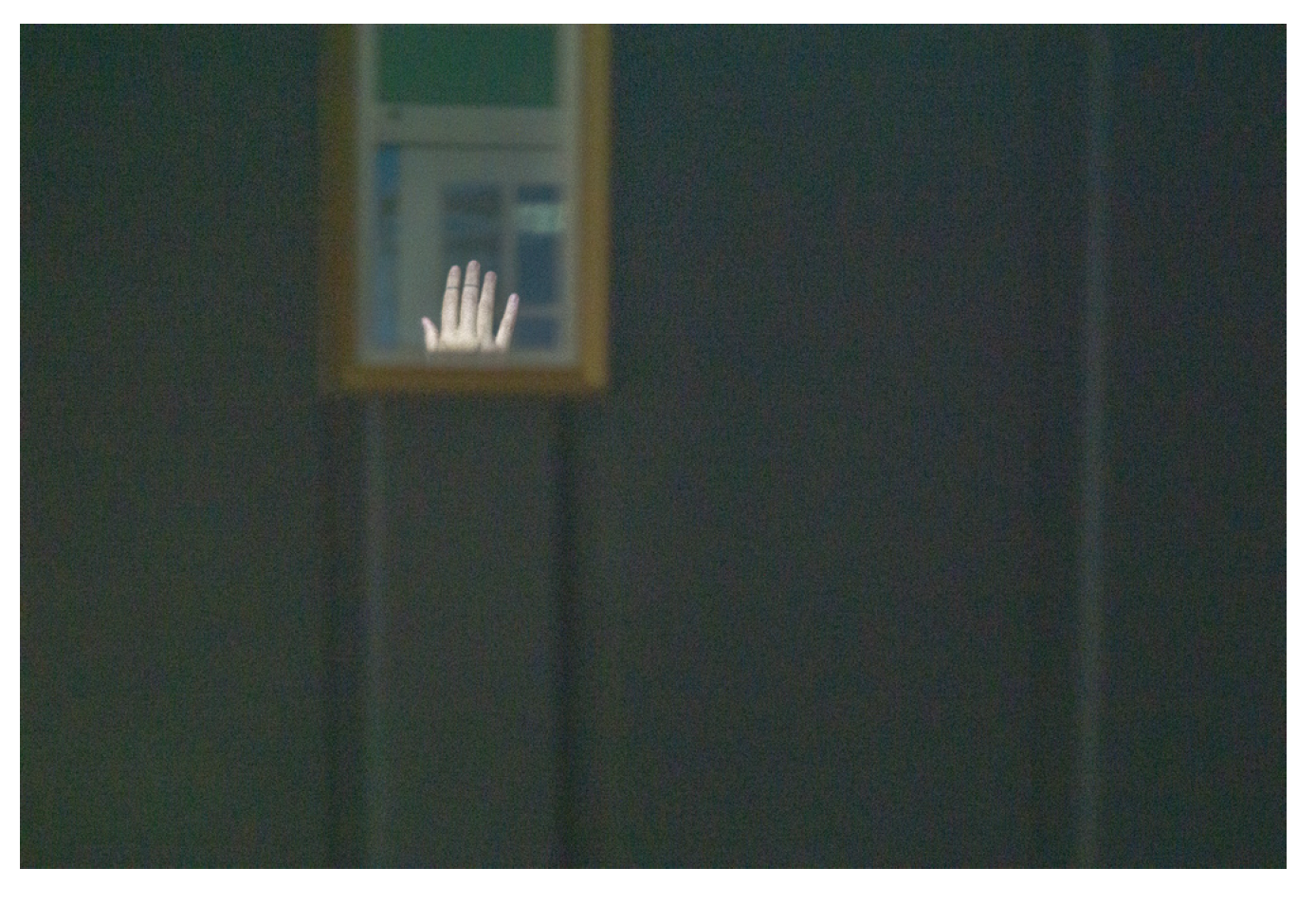
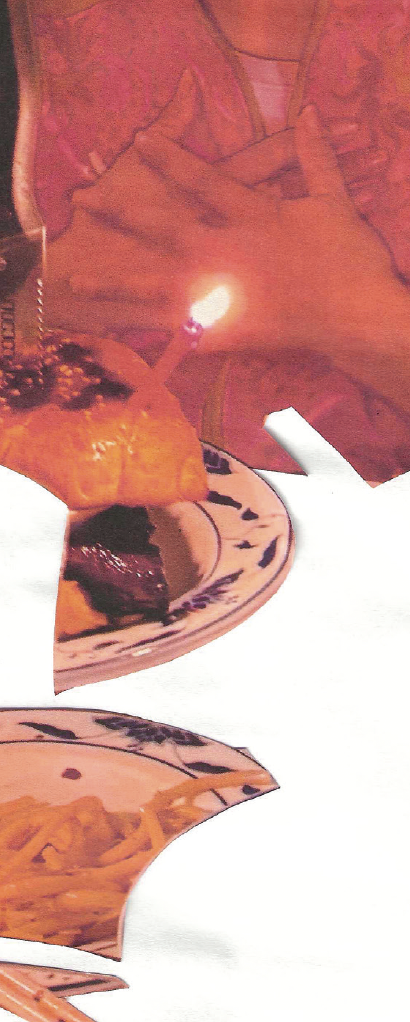
“I once / thought that leaves were leaves. / Now I think they are feeling, / in search of a place— / someone’s hair, a park bench, a / finger. Isn’t that / like us, going from place to / place, looking to be alive?”
—from Victoria Chang's "Passage"
How can the diary be a radical space to share the experiences that shock us into being? Into belonging? How can the deliberate practice of recording our daily lives strengthen our resolve to stay engaged with the present moment, to not turn away? What awakens within us when we intentionally witness ourselves / witness others / allow others to witness us?
A POSSIBLE PRACTICE: I once thought is a collaborative book of diaries in conversation with Victoria Chang's poem "Passage." Includes work by janan alexandra, Julia Arredondo, Alana Dao, Serena Himmelfarb, Tobey Katt, Sydney S. Kim, Addison Namnoum, Sarah Patterson, Maria Pinto, Sarah Shaw, and meg willing.
Full Color Soft Cover | Full Color Interior | 274 pages | 7.5” x 9.5”
-
Includes work by janan alexandra, Julia Arredondo, Alana Dao, Serena Himmelfarb, Tobey Katt, Sydney S. Kim, Addison Namnoum, Sarah Patterson, Maria Pinto, Sarah Shaw, and meg willing.
-
Full Color Soft Cover | Full Color Interior | 274 pages | 7.5” x 9.5”
artists
-
janan alexandra is the author of the poetry collection come from (BOA Editions). The recipient of support from the Mellon Foundation, the Fulbright program, the Vermont Studio Center, and the Provincetown Fine Arts Work Center, janan is a 2025 Djanikian Scholar in Poetry and won the 2023 Adrienne Rich Award for her poem, “On Form & Matter.” Since 2015, janan has taught creative writing in schools, libraries, youth centers, zoom rooms, and carceral spaces. Along with language work, janan has facilitated restorative movement classes; nannied for families; welded ice cream scoops; tied oyster nets; tended land and animals; built furniture; baked bread; painted houses; and busked to make a living. She currently teaches at Indiana University and at the Monroe Country Correctional Center, edits poetry at The Rumpus, and helps curate MONDAYS ARE FREE, a Substack collaboration between BFF poets Ross Gay and Pat Rosal.
-
Julia Arredondo is a traveling Tejana with working-class roots, navigating the changing landscape of creative economies within the United States. Arredondo is formally trained in printmaking and specializes in artistic forms of independent publishing, having founded Vice Versa Press and Curandera Press as entrepreneurial debuts. Her practice explores alternative empowerment and reimagines business structures and spiritual philosophies as platforms for play and experimentation. Arredondo currently lives and works in Portland, Maine.
-
Alana Dao is a mother, writer, and restaurant worker whose creative practice explores contemporary culture, food, and identity. Her work most often takes the form of artists' books, zines, and essays. She received a BA from Smith College and an MA from the School of the Art Institute of Chicago. She is Co-Director of A CLEARING. Born in Texas, she resides in Maine.
-
Serena Himmelfarb (they/ them) is thinking about how the act of observation changes both the observer and the observed; this process of deep witnessing is where their images come from. Joining scientific and post studio methodologies, they make images and objects as a way of investigating their environment.
For the past two years they have taught On Images for University of Chicago, at the Marine Biological Laboratory in Woods Hole, MA. From 2019-2022, they were a Five College Assistant Visiting Professor of Art based at Hampshire College, where they taught Installation and Experimental Form, Painting, Drawing, Art & Politics, and a collaborative, interdisciplinary seminar, The Sound of Life.
-
Tobey Katt (they) is a white, trans* documentarian, interdisciplinary artist, community arts organizer, and maker of gay objects.
Their work explores the intimacies of debauchery and mourning, holding queerness and play at the center as sites of power and compassion. Often in collaboration, they experiment in pursuit of fellowship; using alternative photographic processes, strange little paintings, eulogies, and participatory performance. These gestures suggest that grief and joy are not in conflict, but bound together. Each giving shape to the other.
Tobey received a BA in Sculpture from Towson University and is a co-facilitator for The School of the Alternative, a radical arts school in Black Mountain, North Carolina. You can find them at their most disguised during the annual Mummers Parade, where they perform rituals of public resistance, in pursuit of JOY, as part of the Vaudevillians New Year’s Brigade.
To learn more, flirt, or tell them a story, please email them tobeykatt@gmail or @tobeykatt.
They are based in gorgeous Western Maine, but are forever grateful to be from Baltimore, Maryland.
-
Sydney S. Kim (she/they) is a queer writer and artist based in Los Angeles. She received her MFA from the Pacific Northwest College of Art and BA from Dartmouth College. Her literary work has been published in FENCE magazine, Annulet Poetics, Nat. Brut, and Wildness. Her visual art has been published by A History of Frogs, Publication Studio, and Social Malpractice. Her middle name is Sujin.
-
Addison Namnoum (b. 1992) is a writer, curator, and interdisciplinary artist based in midcoast Maine. She received her BA in Human Ecology at College of the Atlantic in 2014 and her MFA in Studio Art at the Pennsylvania Academy of the Fine Arts in 2019. Her artwork has been shown in New York, Switzerland, Baltimore, Portland, Philadelphia, and Kansas City. She has taught and made speaking and guest critic appointments at the Tyler School of Art and Architecture, the Pennsylvania Academy of the Fine Arts, and Moore College of Art and Design. Recently she completed residencies at the Vermont Studio Center and Pink Noise Projects.
-
Sarah Patterson is a graphic designer and maker. Her work involves themes of the natural world, mother/daughterhood, archiving, memory, and handwriting. She likes the routine of daily projects. Her favorite mediums include collage, drawing, and printmaking. She received her MFA from Vermont College of Fine Arts and has been an artist-in-residence at Monson Arts, Peters Valley School of Craft, Design Inquiry, and Bearnstow.
-
Maria Pinto is an author, educator, and mycophile living in the Boston area. Her work has appeared or will appear in Orion Magazine, Longreads, Necessary Fiction, and Arnoldia. She has led workshops and given lectures for mycological societies in New York, Texas, Wisconsin, and California, and she leads regular forays at Harvard’s Arnold Arboretum. Look for her book of essays inspired by mushrooms, Fearless, Sleepless, Deathless: What Fungi Taught Me about Nourishment, Poison, Ecology, Hidden Histories, Zombies, and Black Survival out with Great Circle Books.
-
Sarah Shaw is a visual storyteller and professor. She makes autobiographical, socio-political, and historical comics with a handmade, decorative flair. She also crafts visual essays, zines, and comics poems that capture the everyday. She lives in Maine with her partner and dog.
-
meg willing is a poet, editor, interdisciplinary artist, and book designer. Her creative work examines the sweet splinterings of memory, belonging, and desire through poetry, collage, cut-up, erasure, and altered books. She currently serves as Art and Design Editor for the literary arts journal Gigantic Sequins; Assistant Manager at Devaney, Doak and Garrett Booksellers; Shop Assistant at Independent Auto Volvo Service; and, with Alana Dao, is the Co-Founder / Co-Director of A CLEARING.
readings
No one creates in a vacuum. This space is dedicated to sharing pieces that are shaping our practices and deepening our understanding of each cycle’s theme. It will be updated bi-monthly with new readings during this active cycle of practice.
“Dear Diary, The World Is Burning” by Katy Waldman
Thinking about diary as companion, as confidant, as friend; (who is allowed to read this diary?); diary as tool, as technology, as archive; (“what functions do such records serve in moments of crisis?”); our private lives; intimacy on the page; the witness, the record, the catalog; the suffering; the alchemy; experience as sacred; shaping our “not-knowing into language”
“Just Ten Images” by Ash Parsons Story from The Book of Alchemy by Suleika Jaouad
Thinking about memory, and how we remember; snippets / snapshots; translating our senses into language; “understanding life by writing it down”; getting specific; the gentle guidance of prompts; the barriers we create to keep ourselves from bearing witness, from sharing what we see; voice and vision; the commitment to “write my life” despite no energy / despite distraction / despite, despite, despite…; showing up in small ways that start to take shape; a body of work from the fragments
Vibe Check’s “Come Out Loud featuring adrienne maree brown”
Thinking about how to “commit to our togetherness” and thinking about: darkness as magic, darkness as spells; movement and endurance / how to keep moving; how to experience something familiar anew; fairy tales, and the structure of our fairy tales; how to subvert a structure to find another; how to move towards each other as we fumble in the dark —
One Week in January: New Paintings for an Old Diary by Carson Ellis
Thinking about what we keep, and what we throw away; what helps us remember; endings; endpages; the diary as portal - to past times, to past places, to past selves; coming-of-age; cusps; collective spaces; what we can know about the past from the present vantage point / what we don’t know in the moment; how writing it down can crystalize a moment; our lives illuminated in the “boring” details; the richness of colors, reflecting —
[to keep knowing] by Aracelis Girmay
Thinking about continuing / continuance; non satis scire (to know is not enough); what unfurls through slow practice; flowering, flourishing; reaching; river running text; text and image together; the texts we come back to; Lorde’s “The Uses of the Erotic”; possibility; rituals of return; “the poet might: stop time”; ancestors, present; “the music is sounding”; what’s carried within, and what’s carried forward; “let me grow you something at the edge of all this violet light”